Recap: Tech Coalition Safe Online Research Fund Convening 2026

AI companions, agentic systems and new forms of exploitation are reaching children faster than evidence can follow. At this year’s Tech Coalition Safe Online Research Fund Convening, researchers and industry practitioners asked what it takes for research to keep up, and for its findings to reach the people who can act on them.

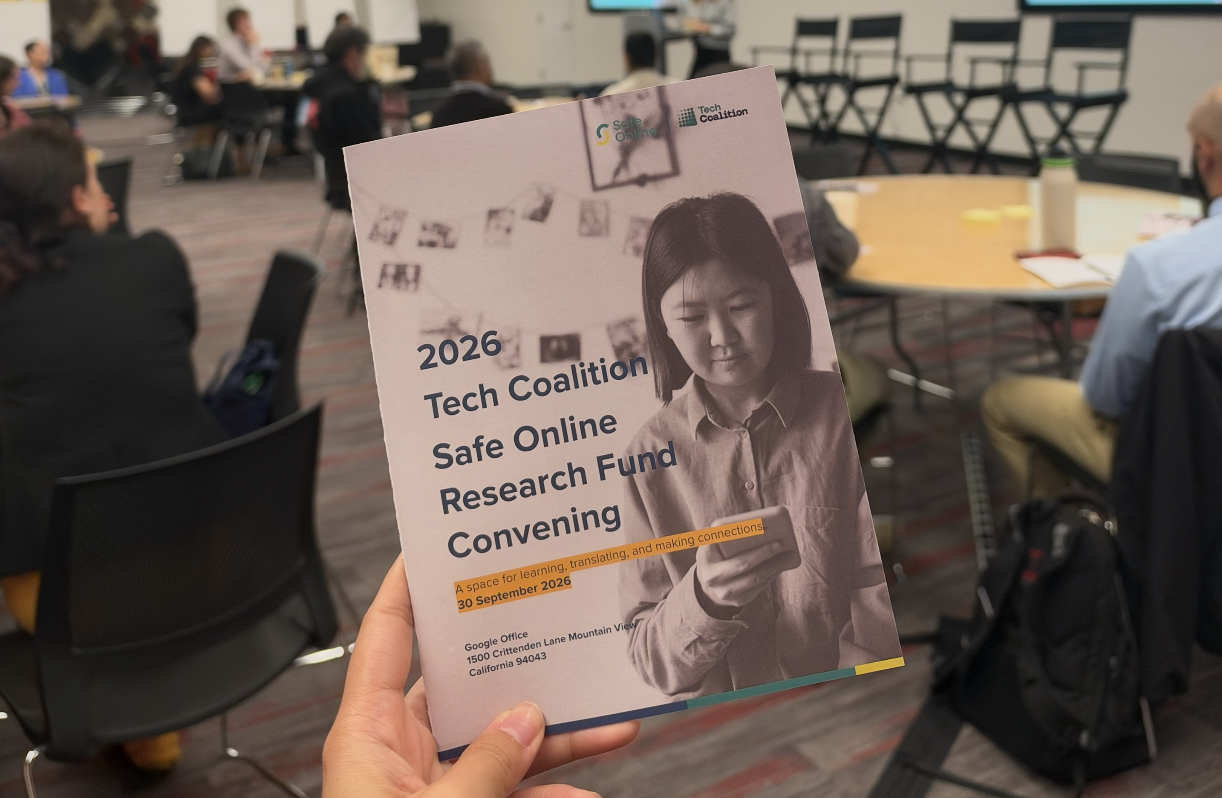
Held on 30 September, the fourth annual convening was hosted at Google on the margins of the Stanford Trust and Safety Research Conference. Nearly 30 participants took part, including researchers from eight Fund-supported projects and representatives of Tech Coalition member companies. The Research Fund has now invested nearly USD 3 million in 19 independent research projects on online child sexual exploitation and abuse (OCSEA).

Over the day, the discussion moved into practical detail: what makes a finding usable for industry teams, and which questions are best answered independently, collaboratively or inside companies.

Research at every stage

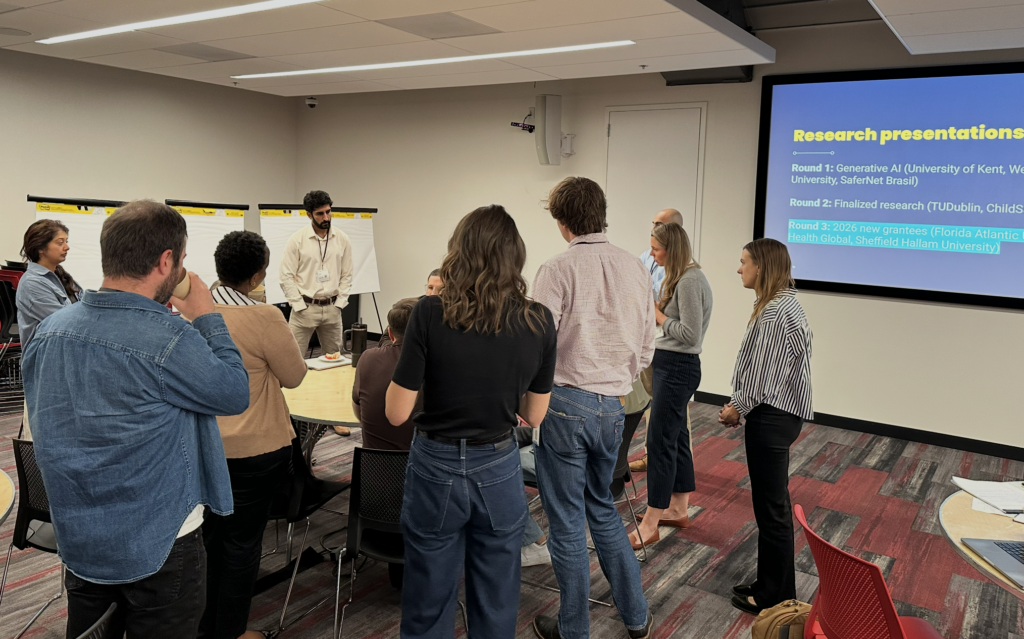
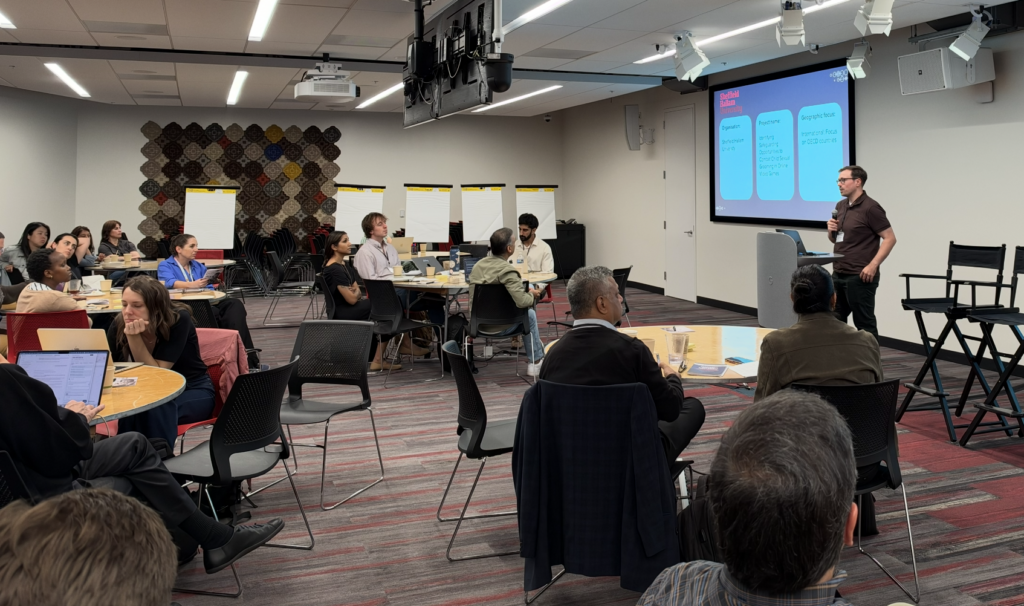
Grantee presentations ran in three rounds. Projects on generative AI from Western Sydney University, SaferNet Brasil and the University of Kent opened the session. Completed research from TU Dublin and ChildSafeNet followed, and the final round offered a first look at the 2026 cohort: Florida Atlantic University on teen use of AI companions, Behavioral Health Global on sadistic online exploitation, and Sheffield Hallam University on grooming in gaming.

What industry can offer depends on where a project is

Having projects at different stages made the asks concrete. Early-stage teams wanted input on their design before fieldwork. Teams with completed work brought tools ready to use, such as TU Dublin’s N-Light software for analysing chat data. Engagement is most useful when it matches what a project needs at that moment, whether that is feedback on methods, access to the right teams or a route to apply findings. 

Agentic AI and the questions ahead

Research also needs to keep pace with how risks are changing on the ground. Melissa Benjamin, Product Manager for Egregious Harm Protections at Google, led a session on agentic AI and what it could mean for child safety, both as a risk and as an opportunity. The group reflected that understanding of agentic AI’s impact on children is still emerging, across research, industry, policy and civil society alike. Independent research can ground that understanding in data, giving everyone working on child safety a clearer picture of how harm happens and who is most affected.

Across the day, participants raised questions that research could help answer. They asked who is accountable when an agentic system misbehaves, and whether the conversational patterns of AI can mirror grooming language in ways that heighten children’s vulnerability. They raised consent and the use of a person’s likeness in AI, children rehearsing disclosure with AI or turning to it in place of a trusted adult, and what safe, healthy AI use looks like for children and how to incentivise it. These questions will feed into the Tech Coalition’s upcoming Multi-stakeholder Forum on Generative AI, including its dedicated agentic AI workstream.

What makes research useful in industry

The group also discussed some of the qualities that make research easier for industry teams to use, grounded in insights shared from one of the Research Fund’s founding members, Alicia Blum-Ross. Useful research is generalisable, so it does not depend on knowing a particular user’s circumstances. It is evidence-based, with recommendations clearly tied to findings and presented accessibly. It is scalable across languages and contexts, and actionable, with recommendations that translate into practical steps. For qualitative work in particular, it is evocative, using examples that are clear and memorable.

Know current practice, and know that platforms differ

Two qualities carry the most specific lesson for researchers. Research should be context-aware about current industry practice, so that recommendations are actionable and forward-looking. It should also be differentiated, recognising that platforms have different features and functions and companies have very different resources. A recommendation that suits a large platform with a dedicated child safety team may not be workable for a smaller company, and research that says so is more likely to be acted on.
Workshop: strengthening the research ecosystem

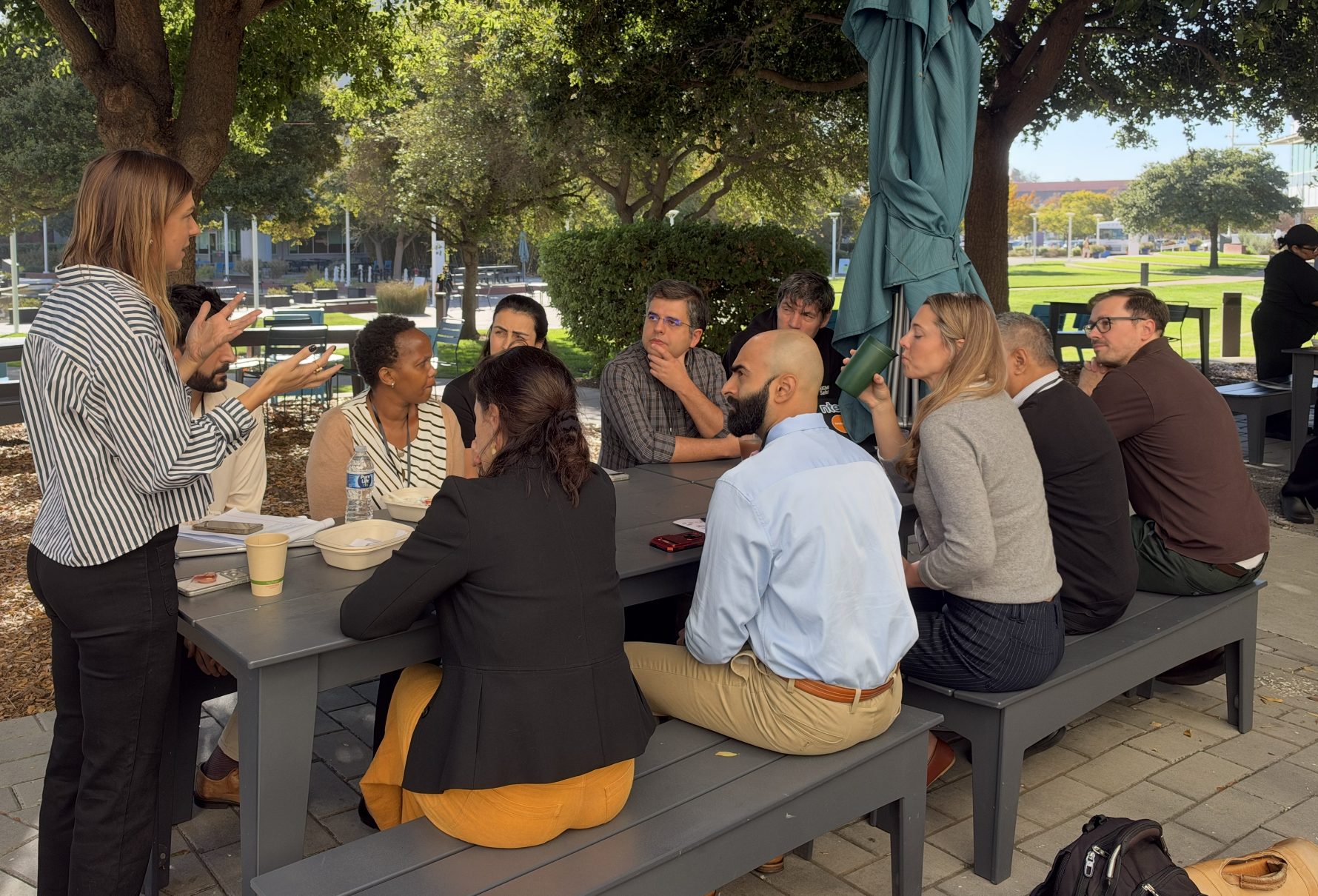
 The afternoon workshop looked at what helps research translate into practice, and which questions are best answered independently, collaboratively or inside companies.

Connect to what already exists

Two cautions stood out. Producing too many resources dilutes attention. Additionally, creating new tools or recommendations without connecting them to existing systems and solutions rarely leads to change. Participants also noted that industry has many layers, so more than one group inside a company usually needs to be informed before anything is acted on. Knowing the companies that others follow matters as well: when smaller companies adopt practices from larger ones, reaching the flagbearers shapes what gets copied across the sector.

Match the question to the right model

Participants agreed that much research benefits from collaboration between researchers and industry, provided research independence is maintained. They also recognised reasons some work stays internal to try to point to ways to promote further sharing and collaboration. Data can be too sensitive to share, ethical and data protection constraints can make external access difficult, and industry often works against turnaround times that external research cannot match. Quality and efficacy evaluation of safety tools, and edge cases that are actioned internally but never published, were placed in this category.

For other questions, independence is what gives the findings weight. One grantee noted that research mapping the scale or prevalence of a problem on platforms carries more credibility when it comes from outside the company or industry. Participants placed several further topics here: where privacy protections create barriers or blind spots for safeguarding children, how child safety measures sit alongside children’s rights, and the longer-term effects of relying on AI on young people’s identity and agency.

Many topics were suited to collaboration as it was acknowledged by all participants that external expert voices are essential for effective industry practices that ensure child safety. Some examples included what happens at the moment of a first refusal, how children disclose harm, peer-to-peer abuse and its normalisation in games, the role of community moderators, and how parental controls work in families where no parent is involved. 

Relationships and data access make collaboration work

Collaboration works best when it is sustained. Participants described the value of ongoing relationships, where learning moves back and forth between researchers and industry over time. What those relationships can achieve also depends on access to data, and participants called for stronger, privacy-preserving data sharing mechanisms that allow external researchers to be even more effective partners in pushing forward solutions with industry.

Closing reflections: collective commitments

Grantee presentations ran in three rounds. Projects on generative AI from Western Sydney University, SaferNet Brasil and the University of Kent opened the session. Completed research from TU Dublin and ChildSafeNet followed, and the final round offered a first look at the 2026 cohort: Florida Atlantic University on teen use of AI companions, Behavioral Health Global on sadistic online exploitation, and Sheffield Hallam University on grooming in gaming.

What industry can offer depends on where a project is

Having projects at different stages made the asks concrete. Early-stage teams wanted input on their design before fieldwork. Teams with completed work brought tools ready to use, such as TU Dublin’s N-Light software for analysing chat data. Engagement is most useful when it matches what a project needs at that moment, whether that is feedback on methods, access to the right teams or a route to apply findings. 

Agentic AI and the questions ahead

Research also needs to keep pace with how risks are changing on the ground. Melissa Benjamin, Product Manager for Egregious Harm Protections at Google, led a session on agentic AI and what it could mean for child safety, both as a risk and as an opportunity. The group reflected that understanding of agentic AI’s impact on children is still emerging, across research, industry, policy and civil society alike. Independent research can ground that understanding in data, giving everyone working on child safety a clearer picture of how harm happens and who is most affected.

Across the day, participants raised questions that research could help answer. They asked who is accountable when an agentic system misbehaves, and whether the conversational patterns of AI can mirror grooming language in ways that heighten children’s vulnerability. They raised consent and the use of a person’s likeness in AI, children rehearsing disclosure with AI or turning to it in place of a trusted adult, and what safe, healthy AI use looks like for children and how to incentivise it. These questions will feed into the Tech Coalition’s upcoming Multi-stakeholder Forum on Generative AI, including its dedicated agentic AI workstream.

What makes research useful in industry

The group also discussed some of the qualities that make research easier for industry teams to use, grounded in insights shared from one of the Research Fund’s founding members, Alicia Blum-Ross. Useful research is generalisable, so it does not depend on knowing a particular user’s circumstances. It is evidence-based, with recommendations clearly tied to findings and presented accessibly. It is scalable across languages and contexts, and actionable, with recommendations that translate into practical steps. For qualitative work in particular, it is evocative, using examples that are clear and memorable.

Know current practice, and know that platforms differ

Two qualities carry the most specific lesson for researchers. Research should be context-aware about current industry practice, so that recommendations are actionable and forward-looking. It should also be differentiated, recognising that platforms have different features and functions and companies have very different resources. A recommendation that suits a large platform with a dedicated child safety team may not be workable for a smaller company, and research that says so is more likely to be acted on.
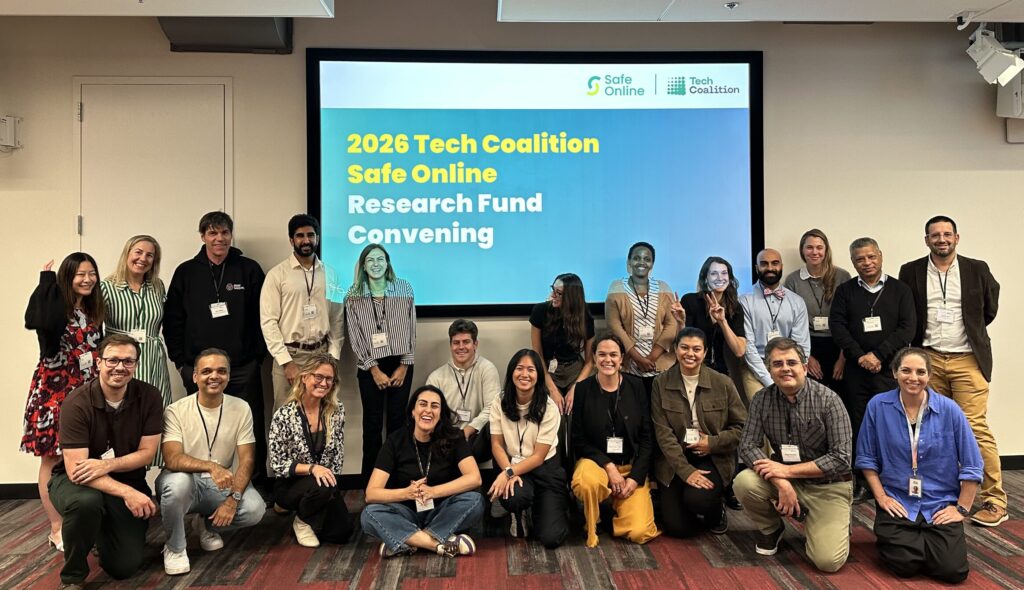
As one researcher put it, “I’ve met such interested industry folks today that I am keen on following up with, and hope that my findings meaningfully inform their product development and practices.”

In the weeks since the convening, conversations started on the day have already led to next steps. Research Fund grantees, including members of the 2026 cohort, have been invited to four upcoming Tech Coalition engagements, including thematic working groups where they will continue exchanging with member companies on their areas of research. Reflections from the discussion on agentic AI are also being carried forward into the Tech Coalition’s Multi-stakeholder Forum in Generative AI.

Given the value of the research projects the Fund has supported and the collaborations that the Fund has enabled, participants were clear that the research should reach people beyond the Fund’s own community. 

Safe Online and the Tech Coalition are sharing thematic learning briefs produced as part of the Research Fund efforts. The briefs draw together findings across grantee projects with the first one focusing on deterrence and help-seeking. Check on the Research Fund webpage in the coming weeks to read them!

See more of our recent updates

Population Foundation of India

Our grantees Population Foundation of India SNEHAI: a Companion to Empower and Protect Countries involved:India Population Foundation of India will sustain SnehAI: A Companion to Empower and Protect to equip adolescents with tools, information and resources to identify and report online CSEA in India. This project, which functions as an artificially intelligent

Read More »

ChildFund Australia

Our grantees ChildFund Australia Swipe Safe: Helping Young People Make the Most of the Online World Countries involved:Viet Nam Since July 2017, the Fund has supported ChildFund Australia’s Swipe Safe program in Vietnam, which aims to help young people navigate the Internet safely by educating them on potential risks, such as cyber

Read More »
Stay in the loop.

Our purpose in detail

We are here to ensure every child and young person grows in to the digital world feeling safe, and is protected from harm.

We support, champion, and invest in innovative partners from the public, private, and third sectors working towards the same objective.

We believe in equipping guardians and young people with the skills to understand and see danger themselves once accessing digital experiences without supervision.

We'd love to have a chat

We're thrilled you're interested in donating to Safe Online - pop in the details below and we will get back to you to set up a discussion.