Over the past decade, efforts to address technology-facilitated child sexual exploitation and abuse (TF-CSEA) have evolved, driven by new evidence, policy and legislative developments, stronger partnerships and growing recognition of the need for sustained action.
Drawing on experiences from Kenya and the Philippines, Safe Online presents a new collection of Global South case studies and knowledge products that explore what has changed, what has helped drive progress and what challenges remain.
Commissioned by Safe Online with support from Oak Foundation, this collection brings together two in-depth country case study reports, three thematic policy briefs, a funding and investment paper, four short films and two infographics. Drawing on research and experiences from Kenya and the Philippines, these resources explore the role of evidence, advocacy, national leadership, prevention, justice, frontline practice, industry engagement and investment in advancing responses to TF-CSEA.
While grounded in the distinct experiences of Kenya and the Philippines, the collection offers wider lessons for policymakers, practitioners, researchers, civil society organizations and funders working across the Global South and beyond.
It aims to make learning from the past decade accessible and useful, supporting countries and partners to build on progress, address persistent gaps and make informed decisions about future action.
Explore the evidence, experiences and lessons shaping the next decade of action to protect children online.
Two countries. Different journeys. Valuable lessons for the Global South.
The country case studies examine how responses to TF-CSEA have evolved over the past decade in Kenya and the Philippines. They document the factors that contributed to progress, the role of national and international partners, and the challenges involved in translating commitments into sustained action.
Commissioned by Safe Online and conducted by Evident, the studies offer detailed insights into national experiences and highlight lessons that can inform responses in other countries.
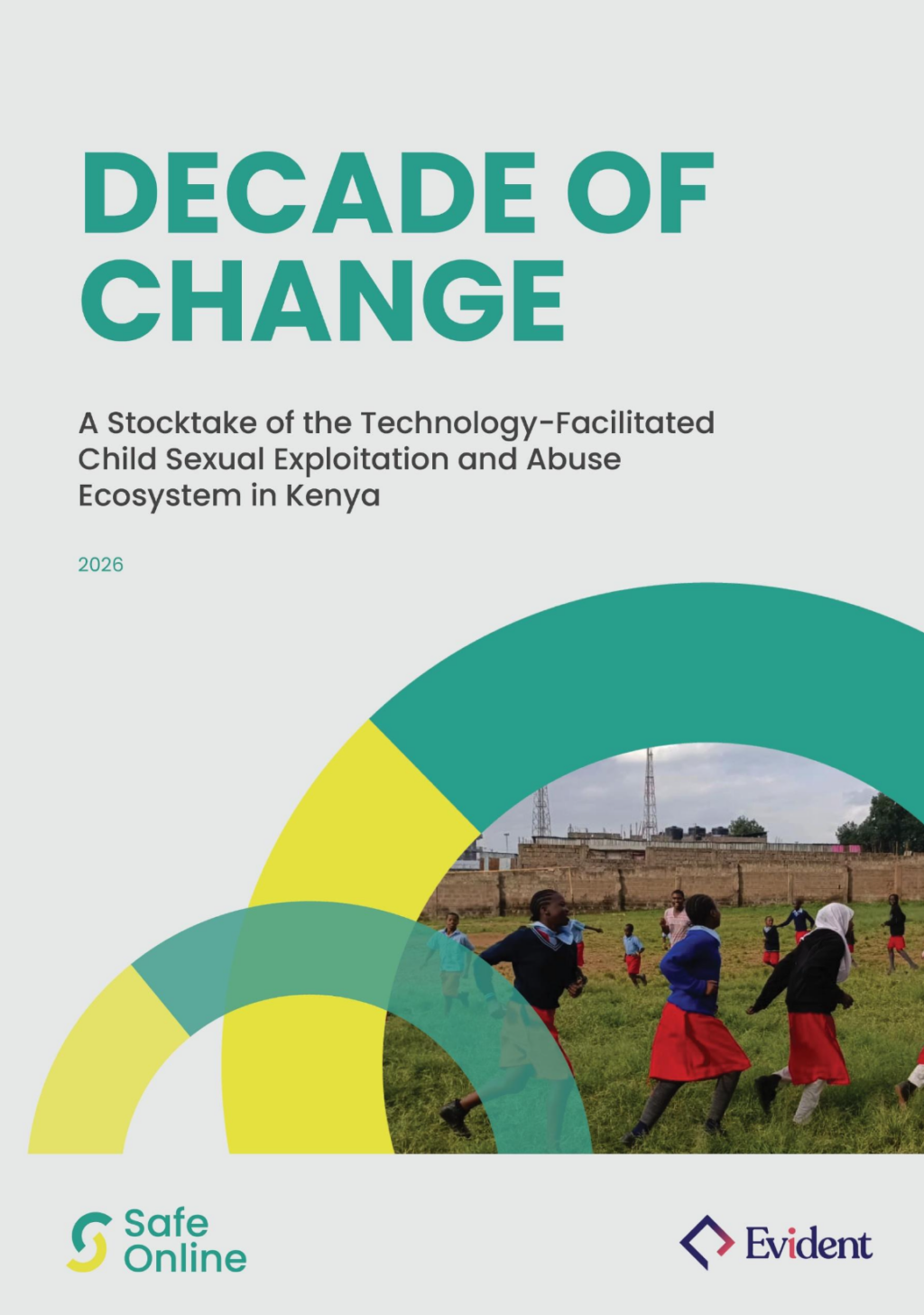
Kenya: A Decade of Change
Kenya’s experience illustrates how research, legislative reforms, civil society engagement and partnerships have contributed to growing national attention and action on TF-CSEA.
The report examines developments in policy, public awareness, coordination, justice and frontline responses, while identifying ongoing challenges related to financing, specialist capacity and implementation at national and local levels.
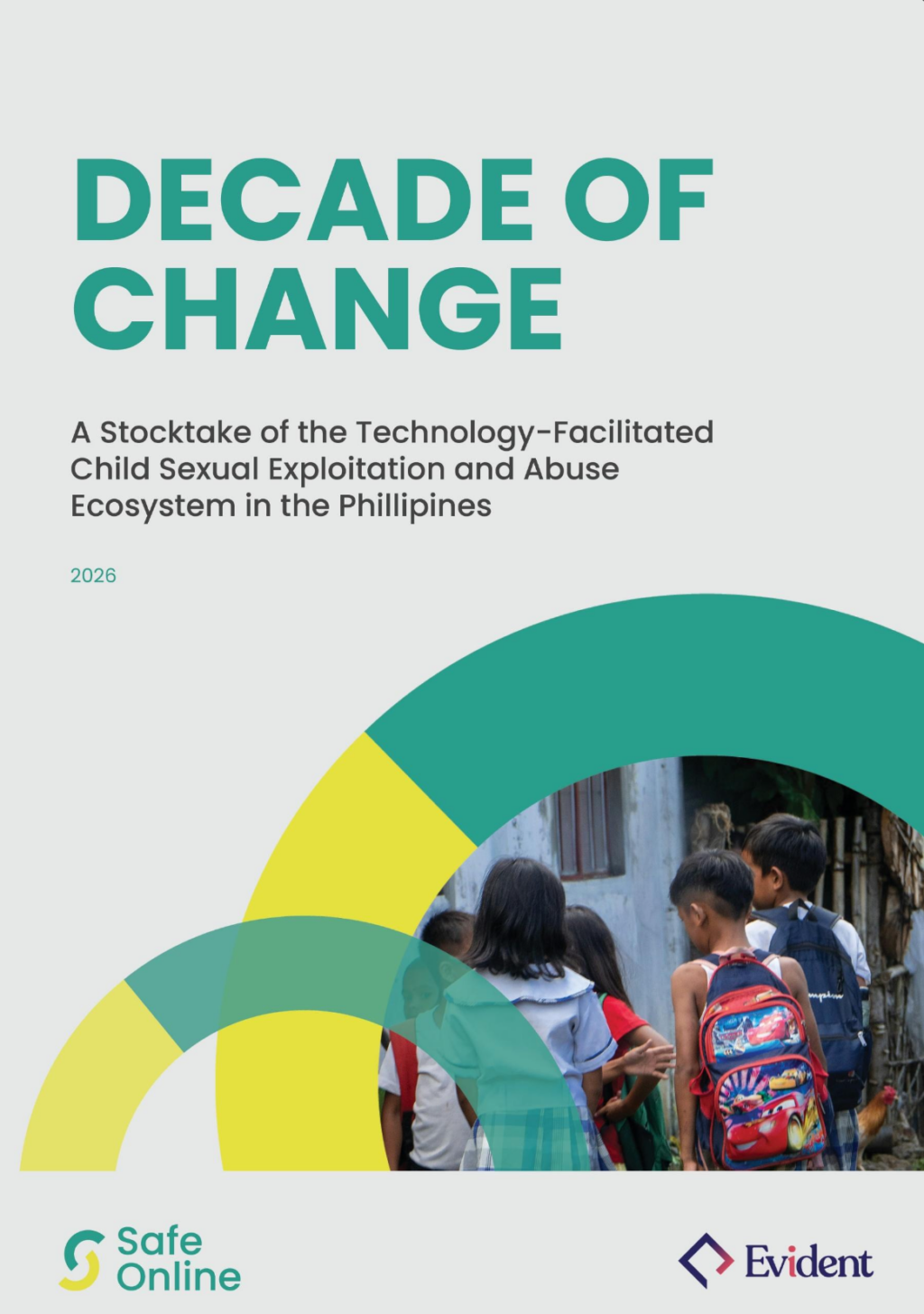
The Philippines: A Decade of Change
The Philippines’ experience highlights the role of evidence, advocacy, legislative reform and collaboration in advancing responses to TF-CSEA.
The report explores progress in national coordination, justice responses, survivor support and local implementation, including emerging examples of government ownership and locally driven action. It also examines the challenges of sustaining progress and ensuring consistent implementation across the country.
Translating research and country experience into practical learning.
Drawing on the findings from Kenya and the Philippines, three thematic policy briefs explore different aspects of effective responses to TF-CSEA. They identify lessons and investment considerations for governments, civil society organizations, practitioners, development partners and other stakeholders.
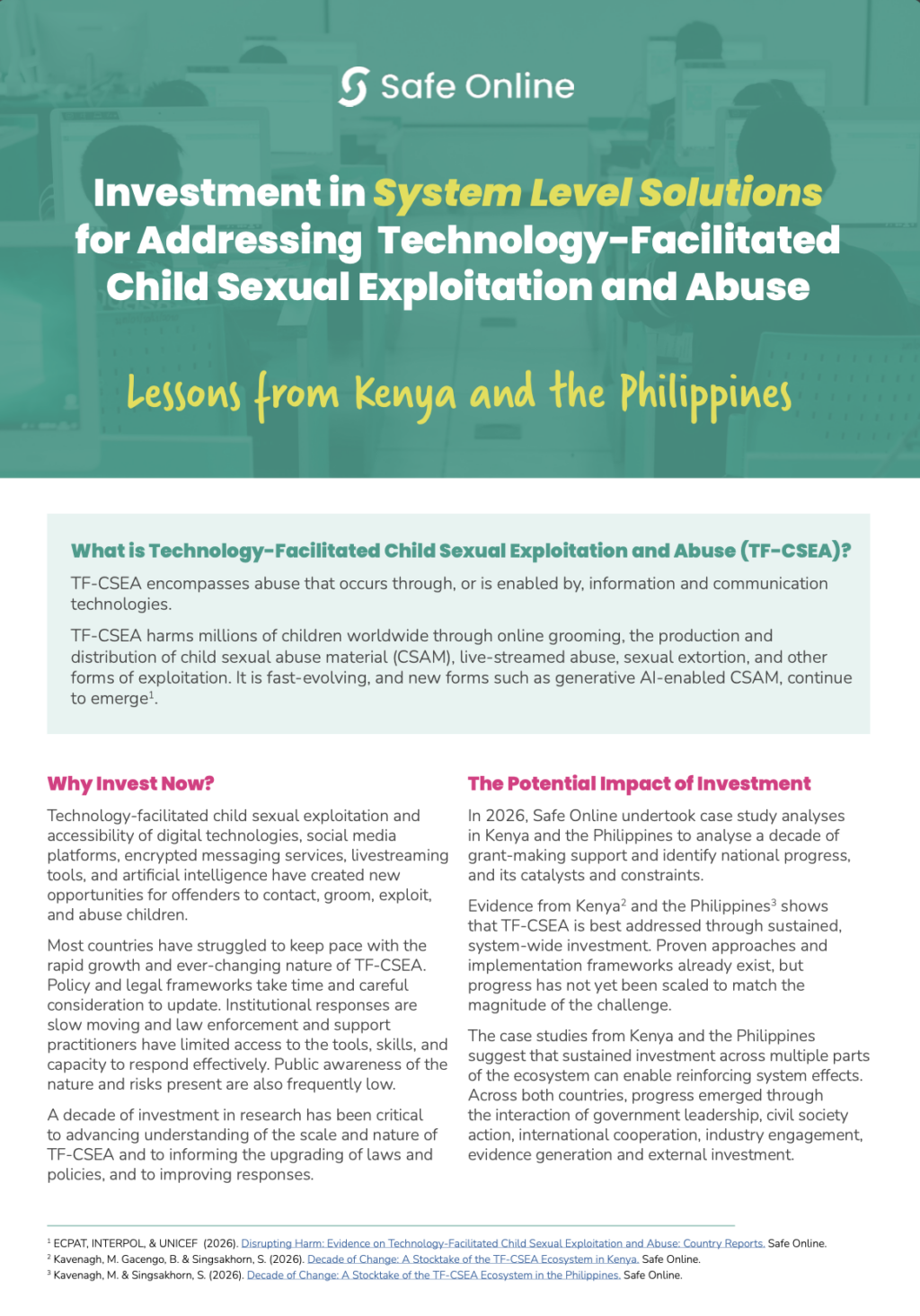
Investing in System-Level Solutions
Explore how sustained investment, collaboration, government leadership, evidence generation and industry engagement can contribute to stronger and more coordinated responses.
The brief examines opportunities to connect interventions across different sectors and support lasting progress.
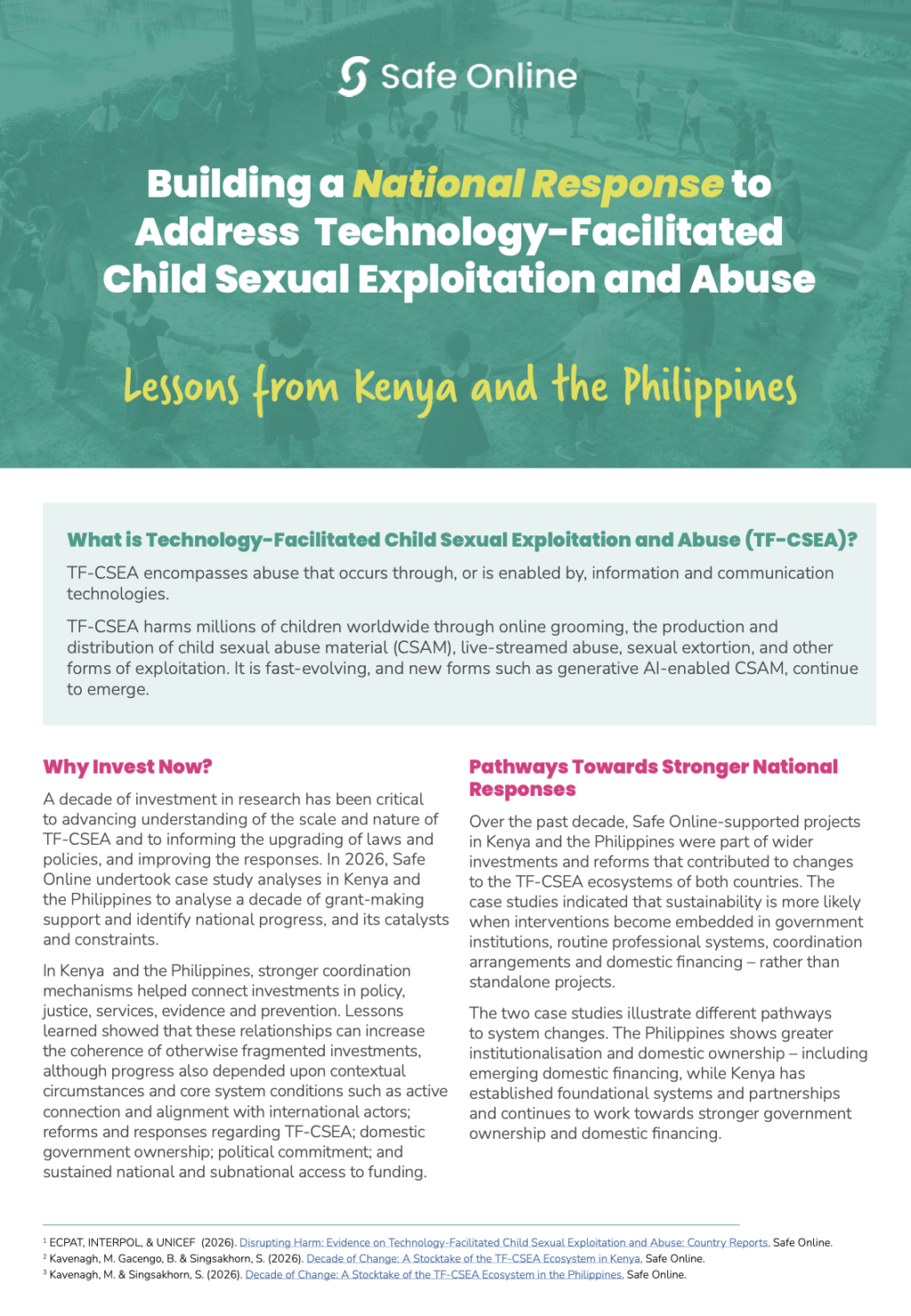
Building National Responses
Explore the different pathways taken by Kenya and the Philippines to advance national action on TF-CSEA.
The brief examines the contributions of legislation, policy, evidence, institutional leadership, coordination and financing, highlighting considerations for countries at different stages of developing their responses.
Investing in Frontline Responses
Discover what is needed to support the professionals and organizations working directly with children, survivors and communities.
The brief highlights the importance of specialist capacity, clear operational procedures, professional wellbeing, effective referrals and sustained resources to improve prevention, protection and justice responses.
What should governments, donors and partners prioritize to sustain progress and strengthen responses to TF-CSEA?
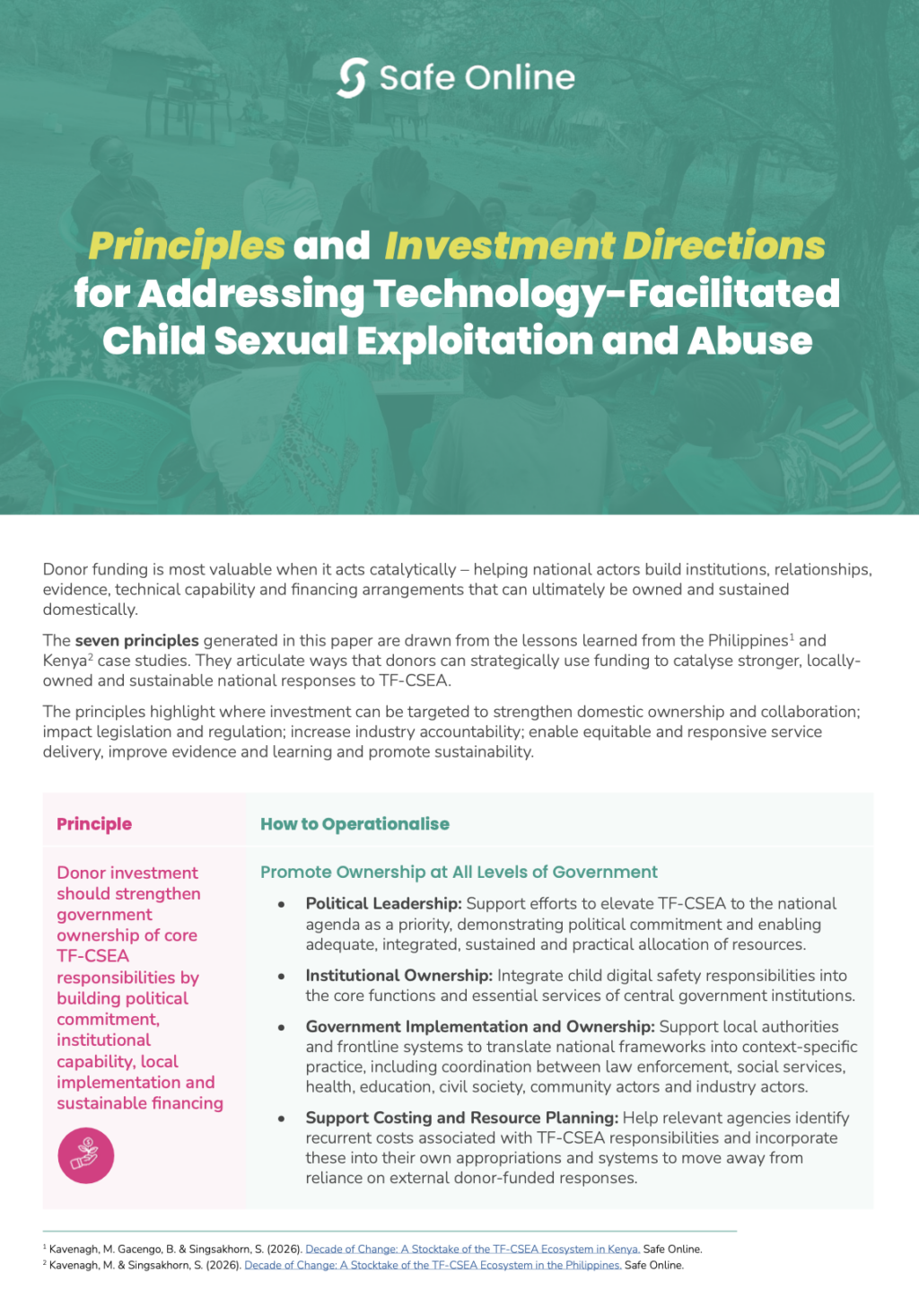
Drawing on lessons from Kenya and the Philippines, the funding paper presents seven principles to guide investment decisions.
These explore opportunities to strengthen government ownership, support legal and regulatory implementation, promote industry accountability, improve collaboration, enable effective frontline services, invest in evidence and learning, and support long-term sustainability.
The paper offers practical considerations for directing resources towards approaches that can be maintained, adapted and expanded over time.
Bringing the research and experiences to life
A series of four short films explores the experiences, initiatives and collaborations behind the research.
The films offer an opportunity to understand different dimensions of the work to address TF-CSEA, from generating evidence and strengthening collaboration to supporting children and improving justice responses.
Child Protection in Practice: Valenzuela
Explore local action through the experience of a child protection centre in Valenzuela City, the Philippines.
From Evidence to Action
Discover how research and evidence can inform policy, practice and national action to address TF-CSEA.
Advancing Justice Responses
Learn about efforts to strengthen justice responses to technology-facilitated child sexual exploitation and abuse.
Ecosystem Change
Explore the role of partnerships, institutions and coordinated efforts in advancing responses to TF-CSEA.
Explore the journey and lessons through two infographics
Two visual resources bring together findings from Kenya and the Philippines, offering accessible ways to understand the changes that have taken place and the lessons emerging from a decade of experience.
Lessons from a Decade of Change
An overview of the key lessons emerging from the two country studies, including what enabled progress, where challenges remain and what governments, funders, practitioners and partners can learn from these experiences.
The infographic examines six interconnected areas of learning, from evidence and implementation to frontline practice, local action, emerging threats and sustainability.
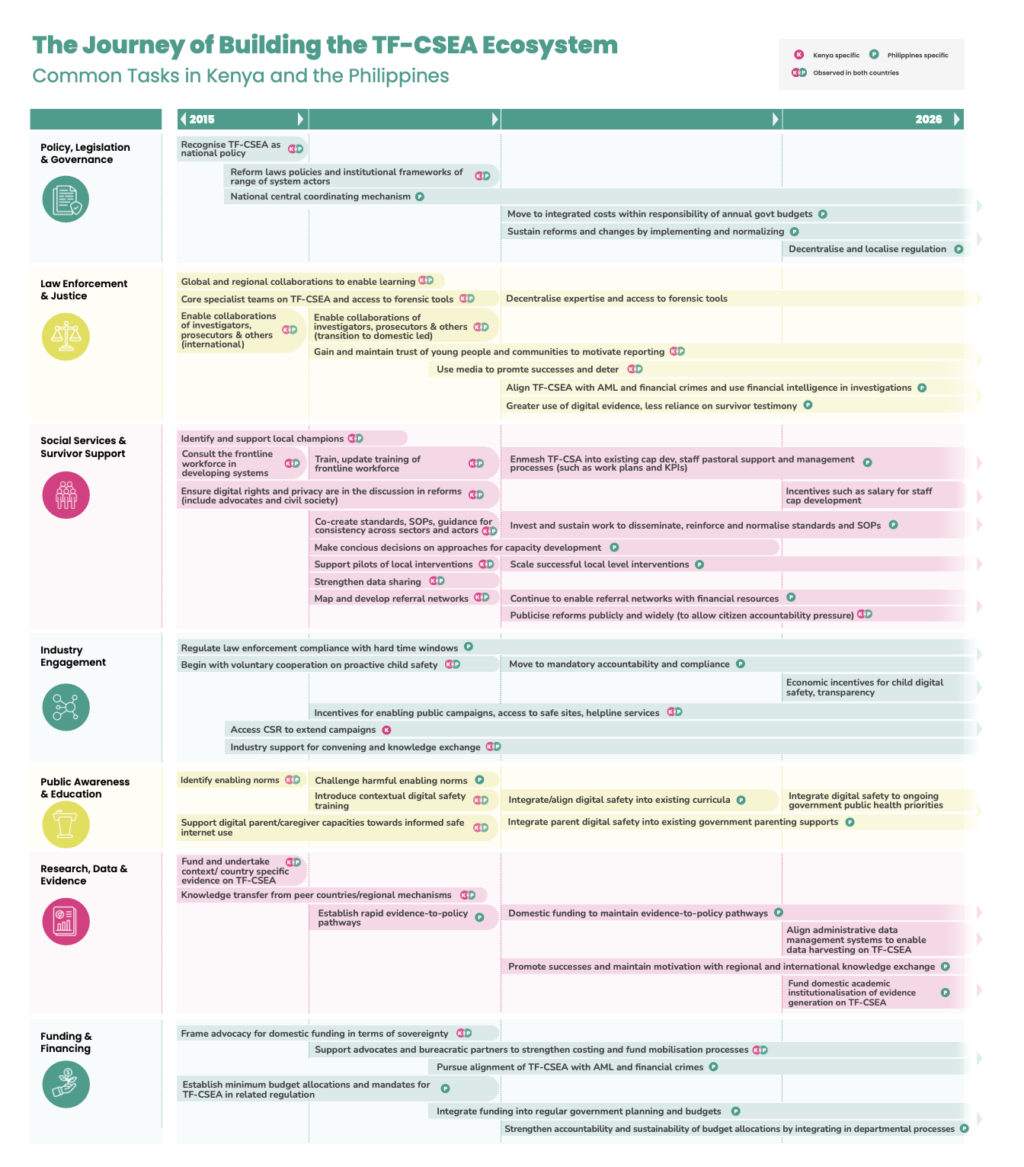
The Journey of Building the TF-CSEA Ecosystem
A visual timeline illustrating the progression of national responses in Kenya and the Philippines from 2015 to 2026.
The infographic explores developments in policy, legislation, justice, survivor support, industry engagement, public awareness, research and financing.
A decade of experience from Kenya and the Philippines offers important insights into how countries can advance efforts to address technology-facilitated child sexual exploitation and abuse.
The research demonstrates the value of context-specific evidence, sustained political commitment, collaboration across sectors, locally relevant approaches and investment that can support long-term progress.
It also highlights persistent challenges. Implementation remains uneven, financing and specialist capacity continue to be constrained, and responses must evolve to keep pace with changing technologies and patterns of abuse.
By sharing these findings and knowledge products, Safe Online aims to encourage learning across countries, inform future priorities and support more effective, sustainable and locally driven action.
The lessons from Kenya and the Philippines contribute to a wider understanding of what it takes to make progress and provide a valuable foundation for continued action across the Global South and beyond.
Explore the resources. Share the learning. Inform future action.
This collection of Global South case studies and knowledge products was commissioned by Safe Online with the generous support of Oak Foundation.
Safe Online gratefully acknowledges the research team, partners, practitioners and stakeholders whose expertise, experiences and contributions informed this body of knowledge.

Copyright Safe Online 2023 ©
All imagery is taken from the Safe Online and UNICEF image library
We are here to ensure every child and young person grows in to the digital world feeling safe, and is protected from harm.
We support, champion, and invest in innovative partners from the public, private, and third sectors working towards the same objective.
We believe in equipping guardians and young people with the skills to understand and see danger themselves once accessing digital experiences without supervision.