
G20 Social Summit South Africa, November 2025
High-level Roundtable: Financing Safe Digital Futures for Children


On 19 November 2025, leaders from governments, multilateral institutions, philanthropy, civil society, the private sector, media, practitioners, survivors, and youth gathered in Johannesburg for the High-Level Roundtable on Financing Safe Digital Futures held at the G20 Social Summit South Africa. More than 70 participants contributed their expertise, including high-level representatives from the Governments of South Africa, Brazil, Kenya, Uganda, Zambia, the African Union Commission, the African Committee of Experts on the Rights and Welfare of the Child, GSMA, MTN, World Bank, and key G20 engagement groups – CivilSociety20, Children20 and Media20.
The roundtable marked a major milestone for the growing coalition Financing Safe Digital Futures: Invest in Children, powered by Safe Online, Brave Movement, ChildFund International, Mtoto News, Plan International, World Vision International, and an expanding network of partners. The coalition seeks to unlock new investments, build shared financing frameworks and elevate survivor- and youth-led advocacy across regions. Building on the Global Ministerial Conference on Violence Against Children (Bogota’, 2024) and on the G20 engagement groups efforts, the roundtable reinforced that financing children’s digital safety and well-being is not optional – it is a core pillar of inclusive digital transformation and a thriving digital economy.
If funding reflects what we value, then today’s investments show we are not valuing children’s digital safety and wellbeing.
The roundtable delivered a clear strategic message: the world is approaching a tipping point where commitments to children’s digital safety must translate into concrete, coordinated, and adequately financed action. At the Roundtable, participants underscored that while digital technologies are rapidly reshaping the lives of millions of children worldwide – bringing both opportunities and unprecedented risks – systems designed to protect children are not keeping pace. Chronic underinvestment, fragmented responses, and lack of cross-sector coordination are leaving children exposed to escalating harms – from AI-driven risks to technology-facilitated sexual abuse, mental health challenges and widening global inequalities.

What emerged is a shared recognition that protecting children online is not an isolated policy issue – it is fundamental to digital transformation, economic development, and social stability.
Participants voiced alignment around the need to embed child digital safety into national budgets, digital economy plans, and international cooperation frameworks. They also highlighted the importance of inclusive, participatory, and human-centred approaches that elevate survivor and youth leadership, and the growing consensus that economic growth without safety is inherently fragile.
The Roundtable set the foundation for a coordinated investment roadmap to unlock sustained, strategic, and cross-sector investments needed Momentum is building toward a systemic shift: scaling evidence-based solutions, leveraging blended and innovative financing, strengthening public–private collaboration, and aligning actors behind shared priorities to ensure that all children can safely and fully benefit from the digital world.
+ 100 organizations from 50 countries
signed the Open Letter calling G20 Nations to protect millions of children facing digital harms every day.
+ 16,500 estimated views
across media coverage + 60 posts across LinkedIn, X, Facebook, Instagram with 22K impressions, 1,2K engagements and 2,4K confirmed reach
#SafeDigitalFutures
75 posts with 1.4 million estimated reach across 9 countries, nearly 5,000 impressions, and engagement from audiences in the USA, UK, France, South Africa, the Philippines, Uganda, Saudi Arabia, Mauritius, and Kenya.
Youth advocates Keegan from @youthantifgmke and Betty interview Marija Manojlovic, Executive Director at Safe Online
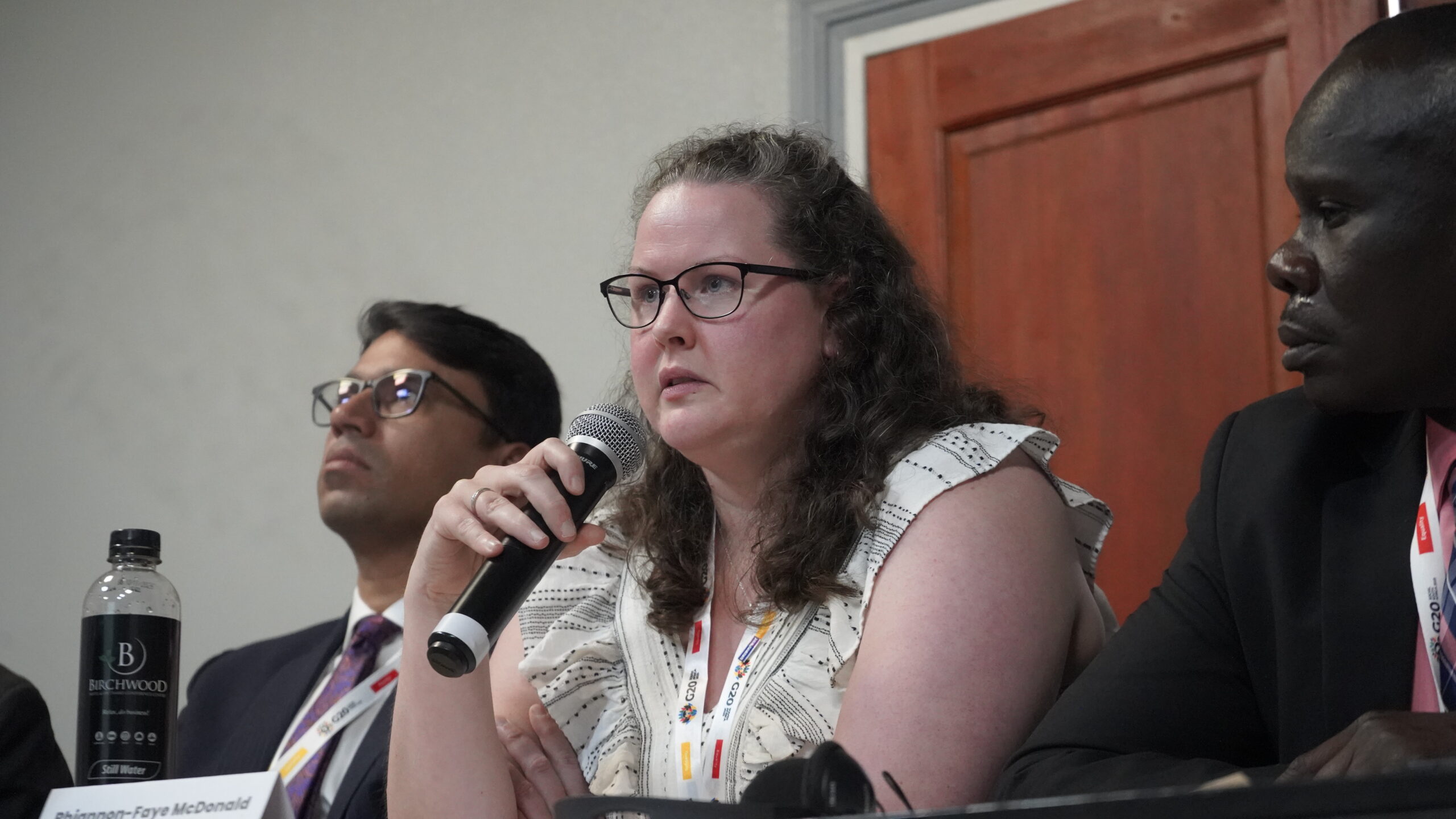
Survivor advocate Rhiannon-Faye McDonald highlights why coordinated global action cannot wait in radio interview



Radio interview with Maria Paula Suarez, Global Policy and Advocacy Lead at Plan International

Who Will Safeguard Our Children’s Digital Futures? WVI blog to the media

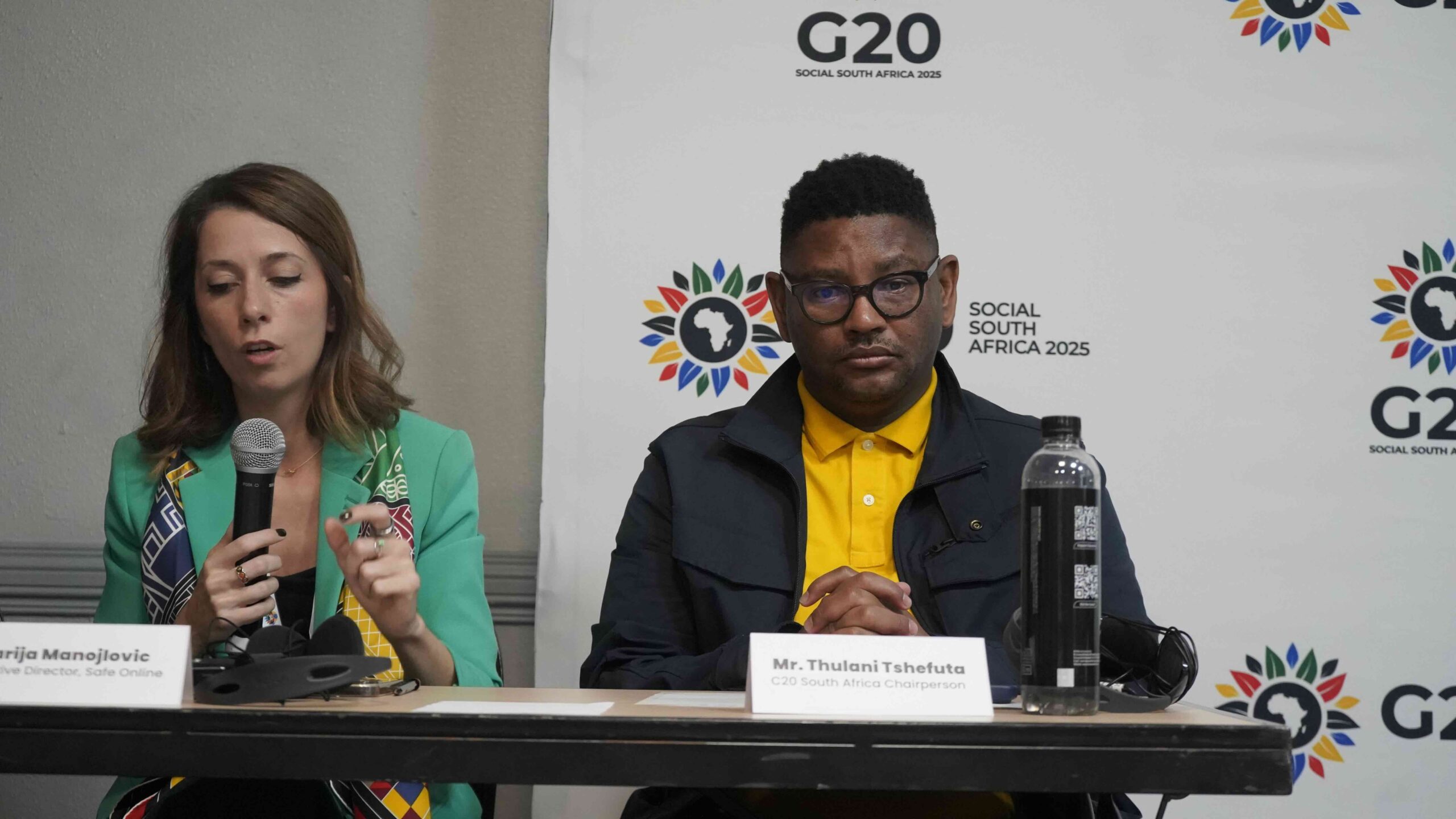
Opening reflections from the Chairperson of C20 South Africa, the Safe Online Executive Director, and South Africa’s Deputy Minister of Social Development set the scene for the day with a clear message – digital technologiesare advancing faster than the systems meant to protect the world’s youngest users. While these tools offer tremendous opportunity, millions of children are subject to technology-facilitated sexual violence and abuse, mental health challenges, and other online harms. Speakers highlighted a central concern: chronic underinvestment is leaving protection systems fragmented, reactive, and unable to keep pace. They flagged that governments and the private sector are to prioritise child safety and mobilise coordinated financing to prevent digital harms from widening global inequalities – from public budgets, philanthropy, private sector investment, and innovative mechanisms.


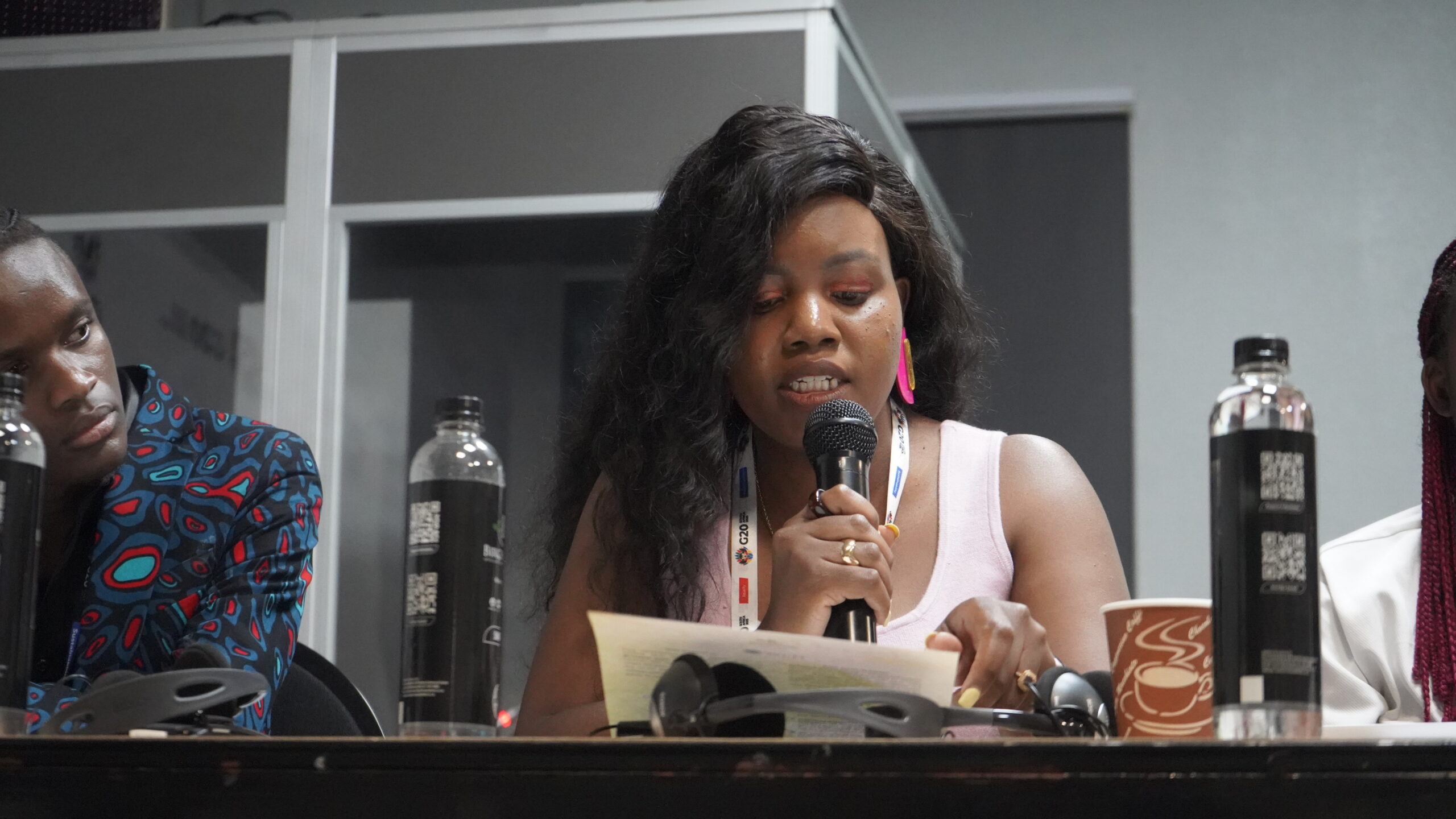
Youth leaders, Children20 representatives, and survivor advocates reinforced the urgency, pointing to a growing protection gap, the need to integrate mental health into online safety, and the importance of funding that matches the scale of the crisis. Their message was clear: digital safety is both a moral responsibility and a human rights imperative. More inclusive, participatory, and human-centred approaches are needed – ones that recognise the agency, voice, and rights of children, survivors, and young people.
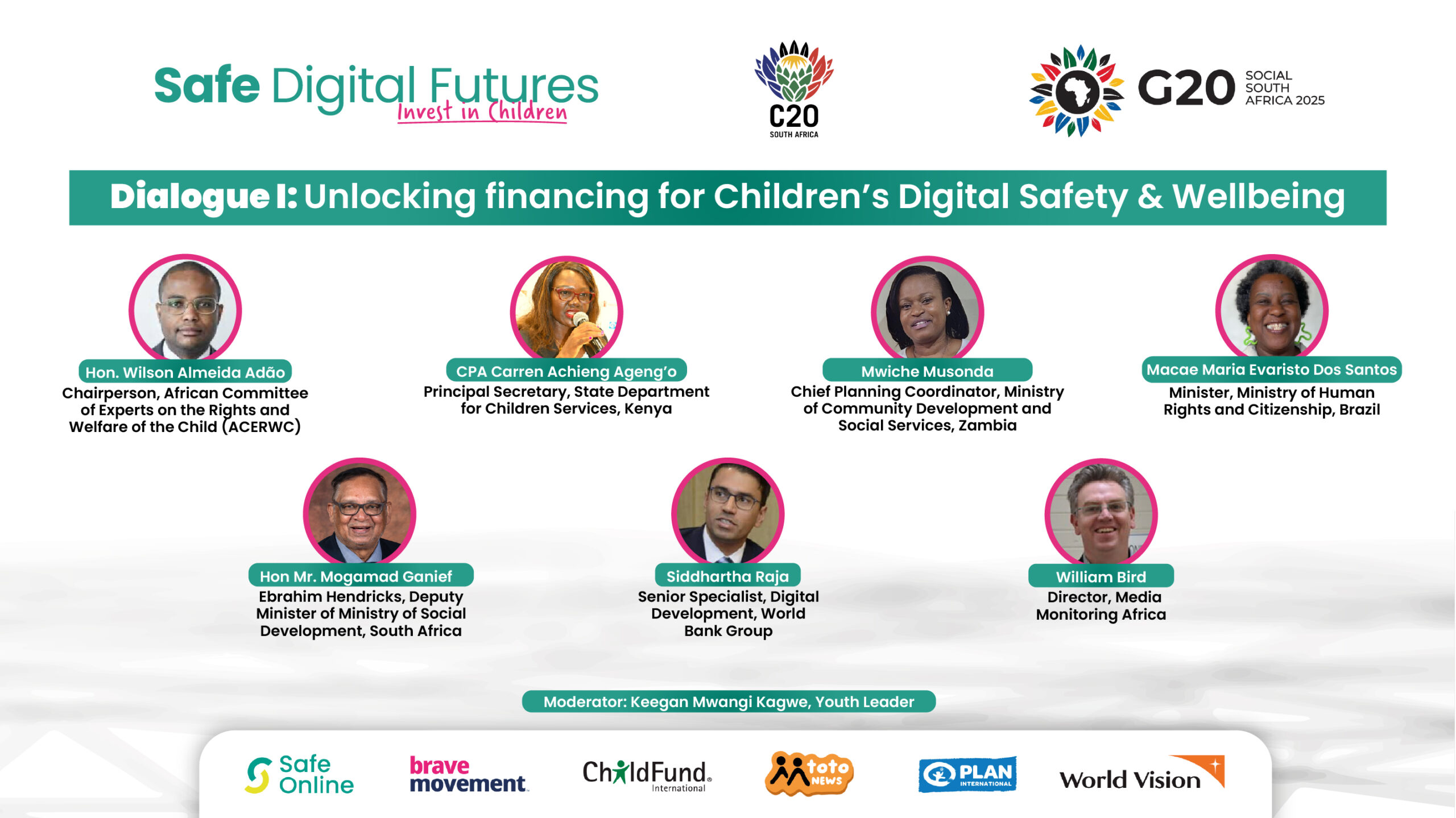
The first dialogue brought together Governments, regional bodies, global institutions, youth leaders, and media actors to identify investment priorities and concrete pathways to embed child digital safety and well-being into national budgets, international coordination mechanisms, and digital economy agendas.
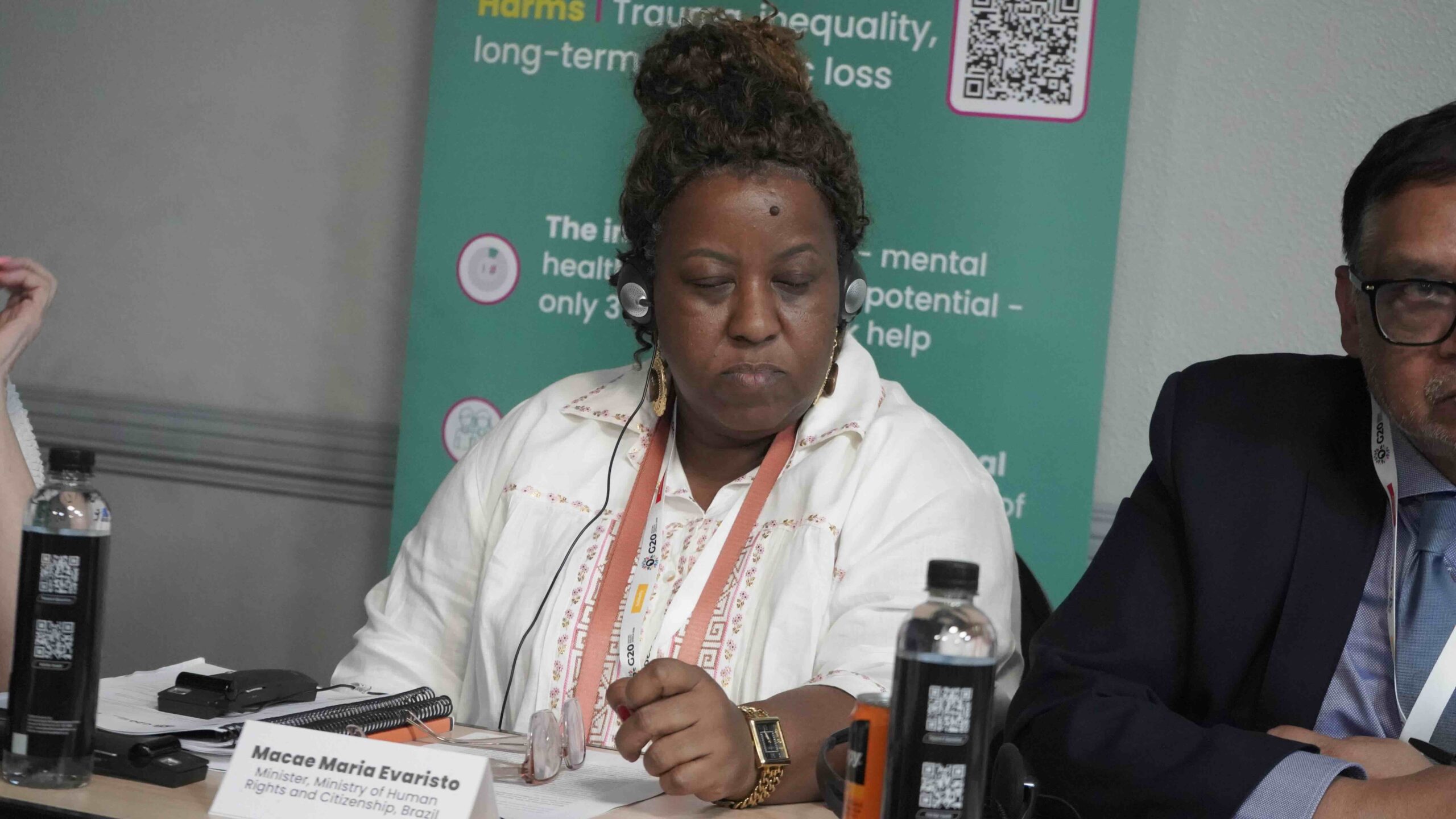
Government representatives from South Africa, Brazil, Kenya, and Zambia highlighted significant policy advances – from integrating child online protection into social development systems and national programmes, to strengthening regional cooperation through the African Committee of Experts on the Rights and Welfare of the Child. Media20 emphasized the vital role of media ecosystems and regulators in building public awareness and accountability, noting that meaningful action often follows when lack of accountability carries financial consequences. Across the discussion, one message was clear: economic growth without safety is fundamentally fragile.
Key priorities that emerged include:
The second dialogue spotlighted concrete, scalable interventions that are advancing child online safety across diverse contexts. Government representatives from South Africa and Uganda, alongside the African Union Commission, GSMA, MTN, Cornerstone Economic Research, Parenting for Lifelong Health, DeafKidz International, Tech Matters,
and child rights experts, presented approaches with proven impact – from parenting support programs and helplines to telecom-led safety tools, AI detection tools, digital literacy initiatives, examples of legal and policy frameworks, confidential reporting platforms, and multisector taskforces.

Key insights from the discussion highlighted several pathways to accelerate investments:
Participants closed with a clear and unified message: protecting children online is not optional – it is a core pillar of digital transformation, connectivity, and development strategies worldwide.
Achieving real progress requires coordinated, multi-sector investments across government, private sector, and philanthropy. Long-term financing and the integration of digital safety into national and sectoral budgets are essential to building scalable, sustainable interventions that put children at the center.
This high-level dialogue set the groundwork for a coordinated investment roadmap for safe digital futures – one that can guide global processes, regional strategies, and national implementation. Through the Financing Safe Digital Futures – Invest in Children coalition, partners will continue to align advocacy, expertise, and resources to ensure that investments are sustainable, coordinated, informed by lived experience, and supported through innovative financing models. The collective goal is to ensure that children regardless of geography, socio-economic status, or disability have access to safe, inclusive, and empowering digital experiences.



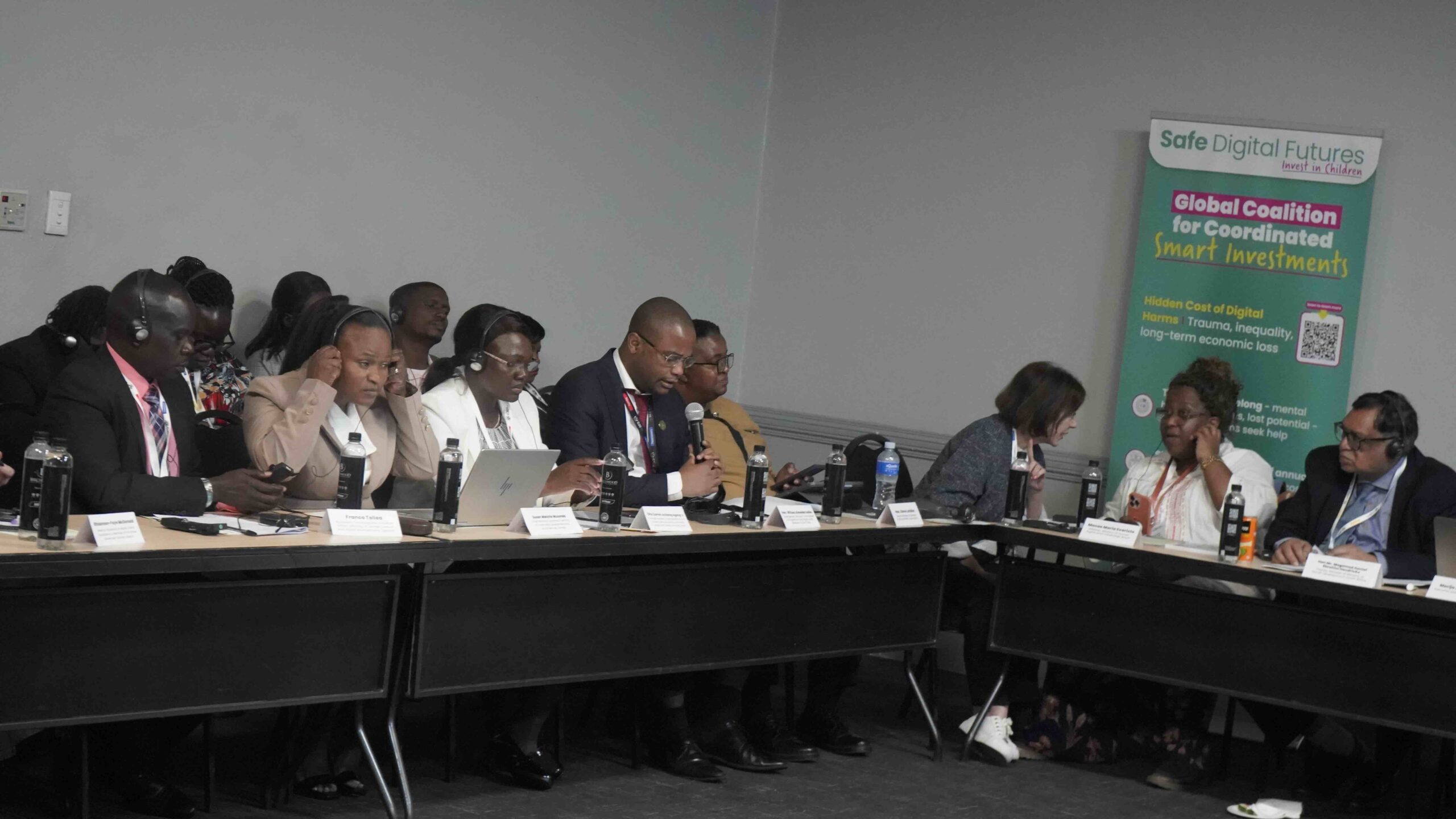


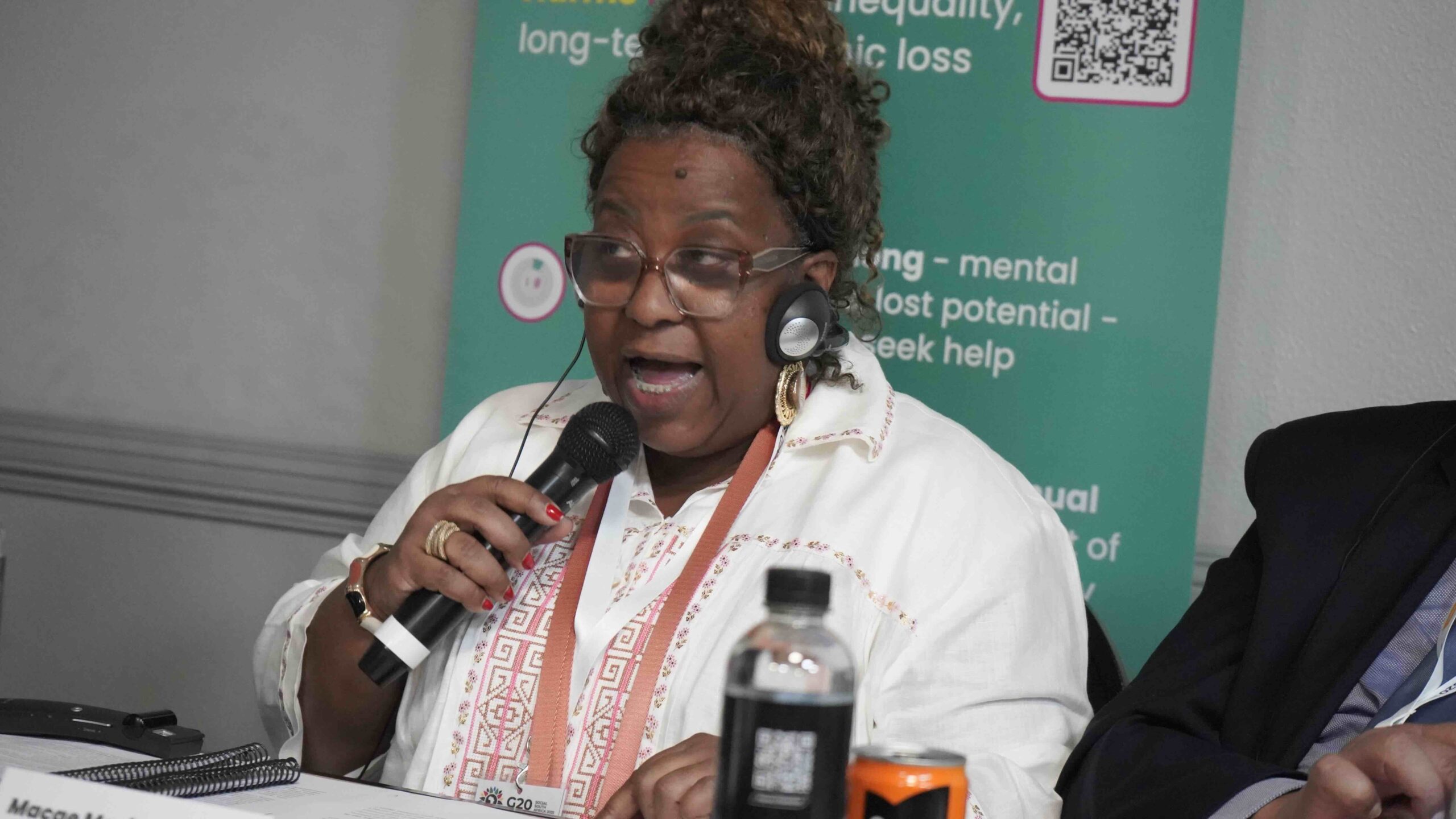
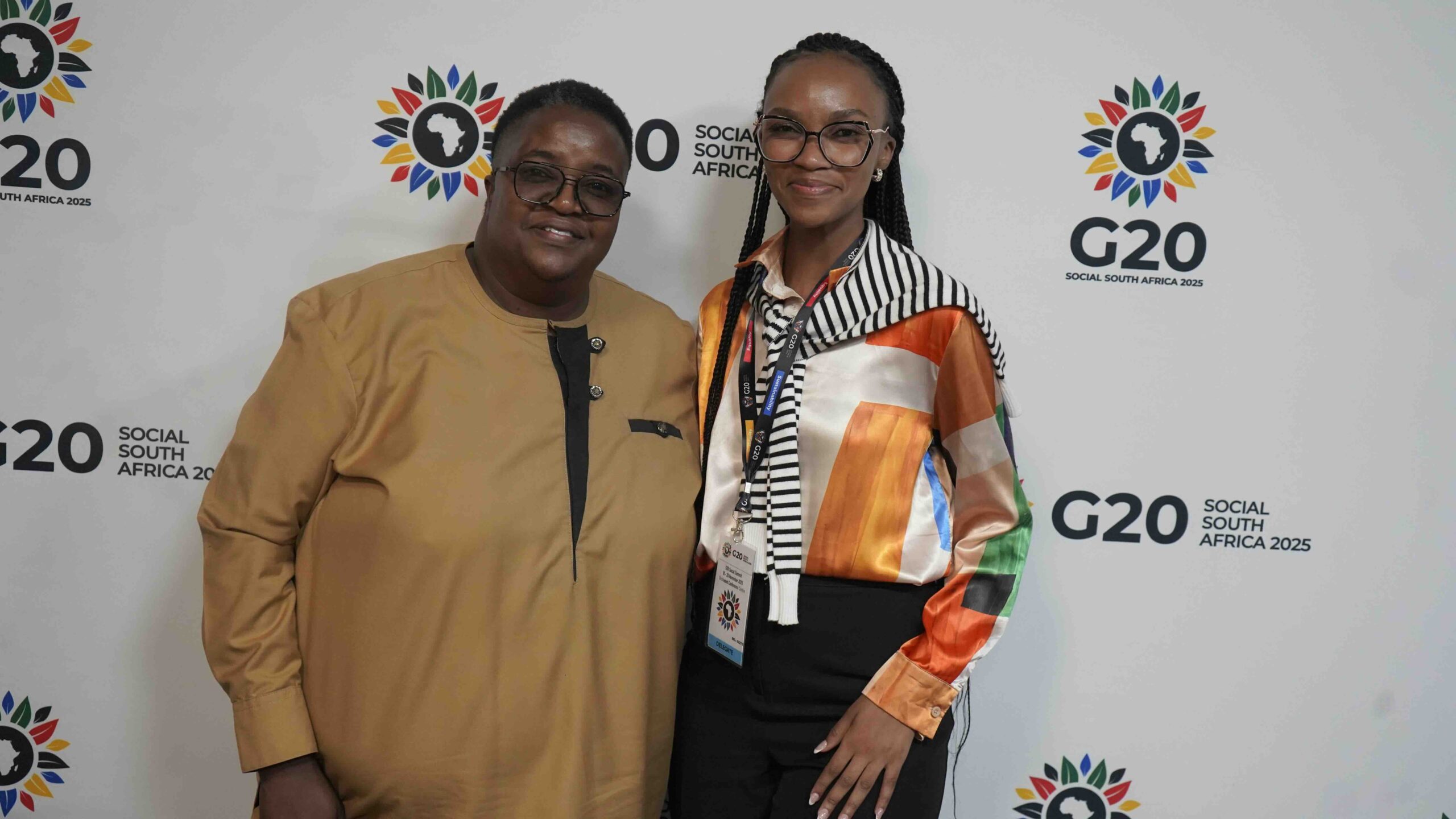
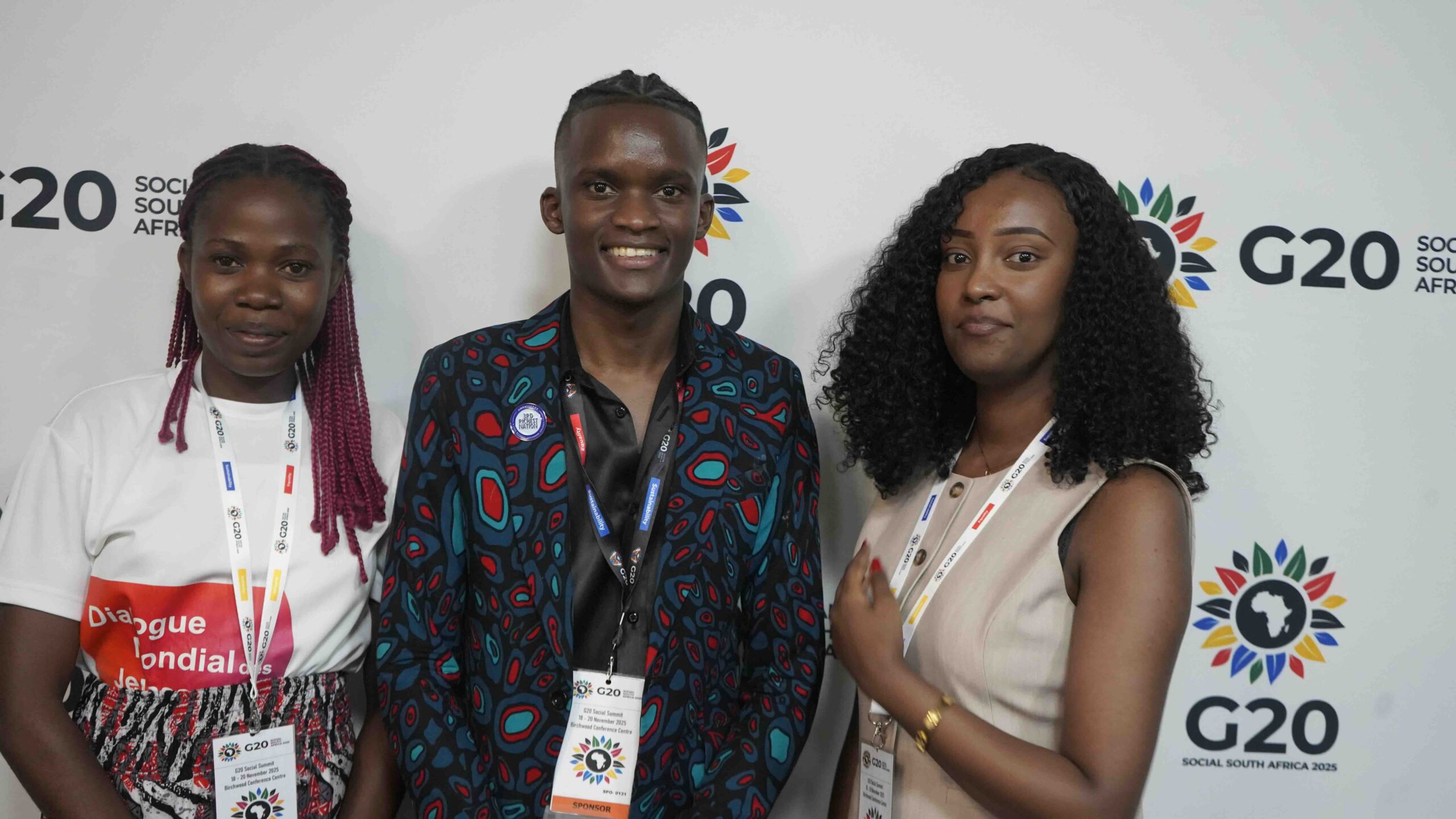

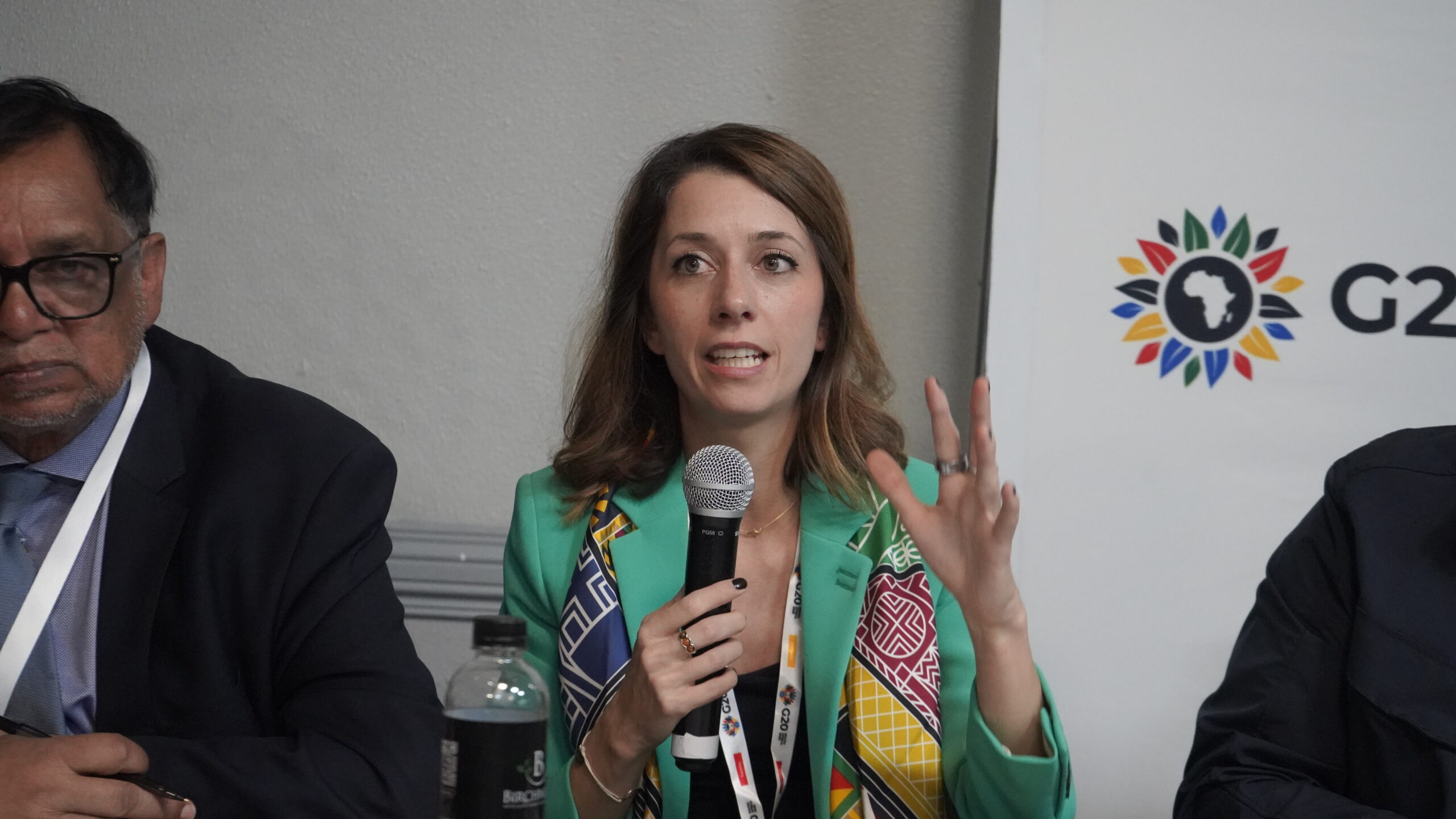
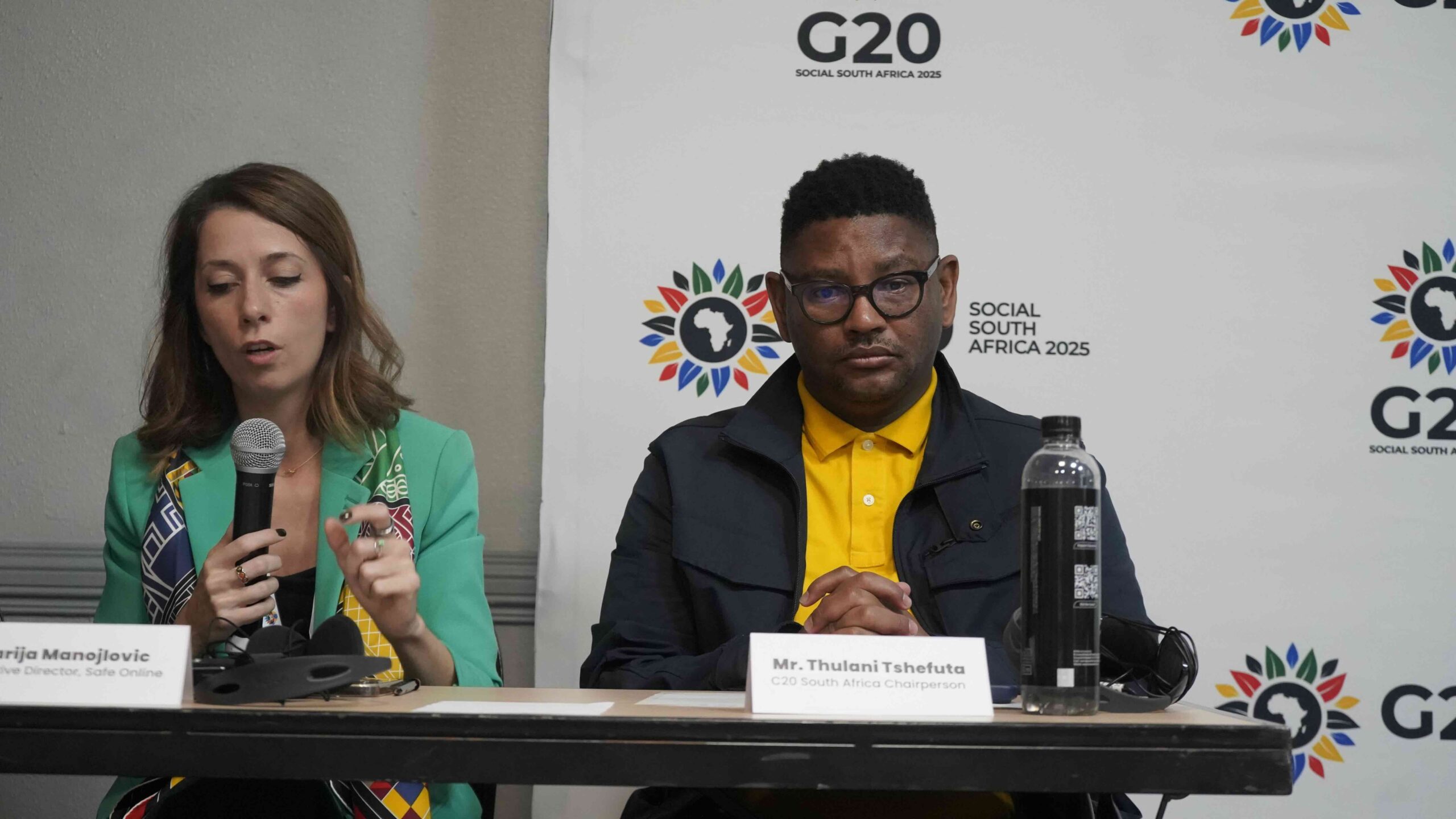



Partners join forces to drive a coordinated and effective response to the growing digital risks and threats affecting millions of children worldwide

Copyright Safe Online 2023 ©
All imagery is taken from the Safe Online and UNICEF image library
We are here to ensure every child and young person grows in to the digital world feeling safe, and is protected from harm.
We support, champion, and invest in innovative partners from the public, private, and third sectors working towards the same objective.
We believe in equipping guardians and young people with the skills to understand and see danger themselves once accessing digital experiences without supervision.


